Teplice — The Oldest Spa Town in the Czech Republic
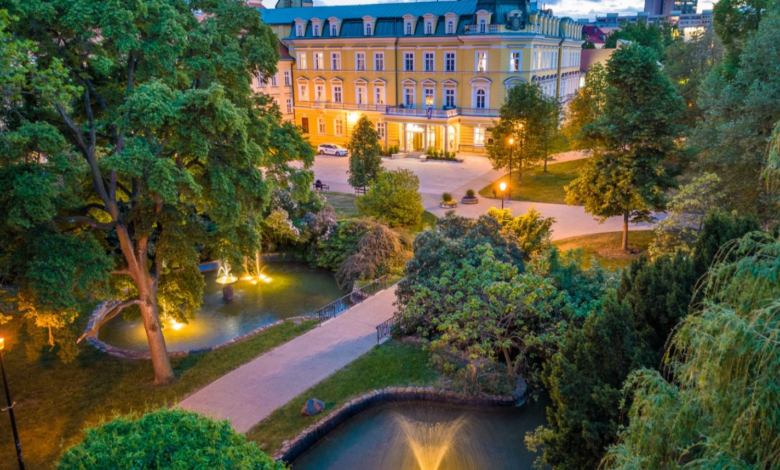
There’s a town in North Bohemia where time seems to move at a slower, more graceful pace. Steam rises from mineral springs, music drifts from grand colonnades, and the architecture still whispers stories of European nobility.
This is Teplice — often called “The Little Paris of Bohemia” or “The Salon of Europe.” It’s not only the oldest spa town in the Czech Republic, but one of the oldest in all of Central Europe. Its legacy of healing, music, and elegance stretches back over a thousand years — and once you’ve walked its promenades, you understand why.
A History So Deep It Bubbles
Teplice’s story begins long before written history — with hot mineral springs that have bubbled from the earth since prehistoric times. Archaeological evidence shows that Celts and later Romans were already bathing here for health and relaxation.
The first recorded mention comes from 762 AD, when the springs were described in early chronicles. But Teplice’s modern story truly began in 1154, when Princess Judith of Thuringia, the wife of King Vladislav II, founded a Benedictine convent near the healing waters. From then on, the area became known as a sacred place of rest and recovery — where faith met nature’s medicine.
By the 18th and 19th centuries, Teplice was the spa capital of Europe. Nobles, artists, and royals from across the continent flocked here to “take the waters.” Carriages lined the cobblestone streets; orchestras played under leafy promenades; and candlelight flickered across ornate spa pavilions.
A Town of Music, Royalty, and Genius
Teplice wasn’t just a place for healing — it became a meeting ground for some of Europe’s greatest minds.
The town’s golden age unfolded in the late 1700s and early 1800s, when it was a favorite destination for the aristocracy. Guests included:
Beethoven, who composed part of his Seventh Symphony here and famously met Goethe during a summer stay in 1812.
Franz Liszt, Richard Wagner, and Clara Schumann, all of whom performed in the town’s elegant concert halls.
Emperor Francis I, Tsar Alexander I, and King Frederick William III, who gathered here in 1813 during the Napoleonic Wars to form the anti-Napoleon coalition — known historically as the Teplice Peace Conference.
It’s incredible to imagine — Beethoven strolling past the same spa colonnades where Czech families now walk their dogs and sip mineral water.
Healing Waters and Hidden Strength
The heart of Teplice has always been its thermal springs, which reach temperatures of around 44 °C (111 °F) and are rich in minerals like sodium, calcium, and fluoride. These waters have been used to treat musculoskeletal, neurological, and circulatory disorders for centuries.
Today, the Lázně Teplice v Čechách spa complex continues this tradition. Modern facilities blend seamlessly with classical architecture — the grand domed buildings still echo with the elegance of the Austro-Hungarian era. Inside, you’ll find treatments that combine hydrotherapy, massage, mud baths, and medical wellness — continuing a lineage of healing that’s nearly 900 years old.
Architecture of Grace
Teplice’s architecture is a reflection of its layered history — Renaissance, Baroque, Neo-Classical, and Art Nouveau styles mingle in perfect harmony.
Highlights include:
Zámek Teplice (Teplice Chateau) – A Baroque palace that once hosted European monarchs. Today, it houses the Regional Museum, where you can see artifacts tracing the town’s spa and cultural history.
Church of St. John the Baptist – A gem of early Baroque design.
The Colonnade and Spa Quarter – A labyrinth of ornate facades, fountains, and parks perfect for a slow stroll.
The Imperial Spa (Císařské lázně) – One of the most photographed buildings in the city, with its grand white columns and ornate domes.
Walking through Teplice feels like stepping back into the 19th century, when the world measured leisure by the sound of a string quartet and the pace of a carriage horse.
Parks, Promenades, and Peace
Beyond its architecture, Teplice is green and full of life. The Šanov Park is the town’s pride — manicured gardens dotted with fountains and sculptures where guests once promenaded in parasols and top hats. The air carries a faint scent of sulfur from the springs, mingled with the perfume of linden blossoms in summer.
Just outside the town lie the Ore Mountains (Krušné hory) — perfect for hiking in summer or skiing in winter. Trails lead through beech forests and old mining villages that once supplied Europe with tin and silver.
And for a modern twist, the AquaTherm Teplice complex offers family-friendly pools, saunas, and wellness retreats, continuing the tradition of rest and renewal in a more contemporary form.
Culture, Then and Now
Despite its aristocratic past, Teplice remains a living city — not a museum. It hosts concerts, art exhibitions, and spa-season festivals that celebrate Czech culture with music, dance, and folk traditions.
The Beethoven Festival, held annually, honors the composer’s connection to the city with classical performances in historic venues. The local Severní Čechy Philharmonic Orchestra keeps the tradition alive, ensuring the sound of music never leaves Teplice’s heart.
For those who prefer something quieter, you’ll find cozy cafés, bookshops, and mineral fountains where locals still gather with porcelain cups to sip the same healing waters their ancestors did centuries ago.
A Place Between Past and Present
Teplice has weathered its share of storms — the devastation of WWII, post-war decline, and the industrial scars of the communist era. Yet, like the springs themselves, it has continually renewed. Today it’s experiencing a quiet renaissance: renovated facades, new cafés, boutique hotels, and a rediscovered pride in its glorious past.
Czechs have always said that Teplice isn’t just a place for the body to heal — it’s a place for the soul to remember what peace feels like.
Teplice reminds me why I love sharing the Czech Republic with you. It’s a town that captures everything I adore about this country — beauty, depth, resilience, and that unmistakable Czech grace that survives through centuries. It’s also a town close to home because several of my ancestors come from the region.
From Beethoven’s music to the whisper of mineral springs, Teplice feels timeless — a living poem of history and healing.
Thank you for helping me keep these stories alive here on Patreon — stories of places that deserve to be remembered not just for their history, but for the quiet lessons they still teach us about restoration and endurance.
Until next time,
Kytka & Richard
Kytka writes about lifestyle, literature, art and history. Find her at www.patreon.com/kytka/posts