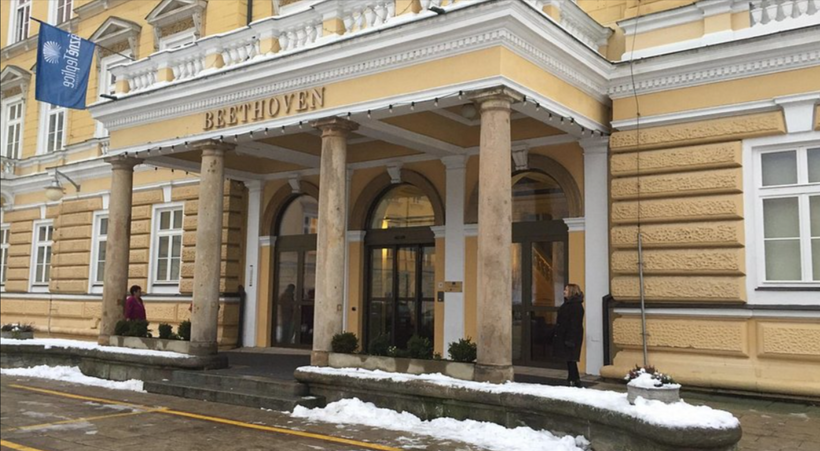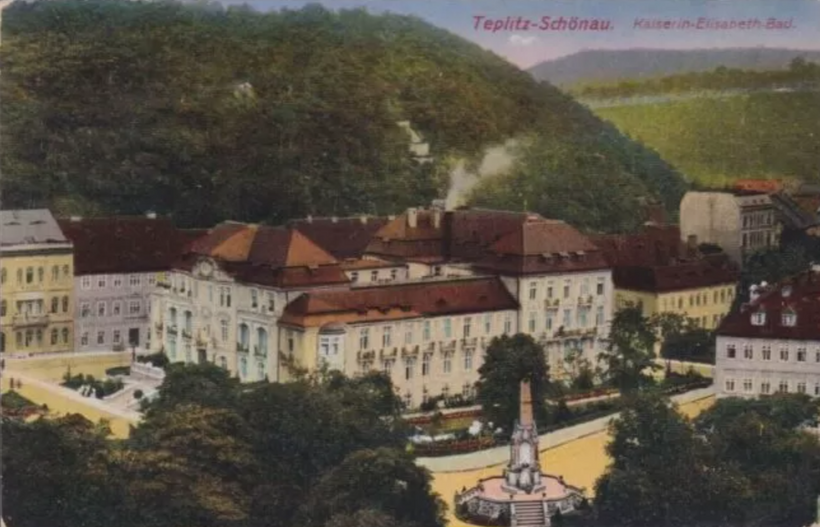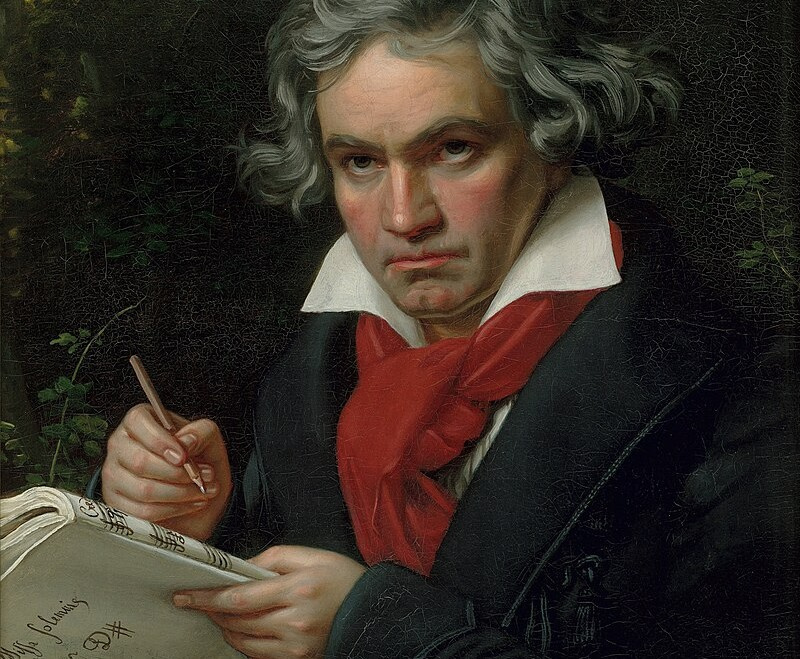
Beethoven in Teplitz — A Summer of Music, Mystery, and Melancholy
By Kytka
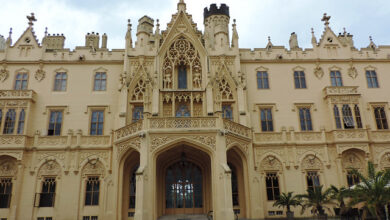
Every corner of the Czech Republic holds stories that whisper if you’re quiet enough to listen — and few places echo with as much history as Teplice, once known as Teplitz. This elegant spa town in North Bohemia has long been a sanctuary for artists, thinkers, and royalty who came seeking healing, inspiration, and a touch of calm from its warm mineral springs.
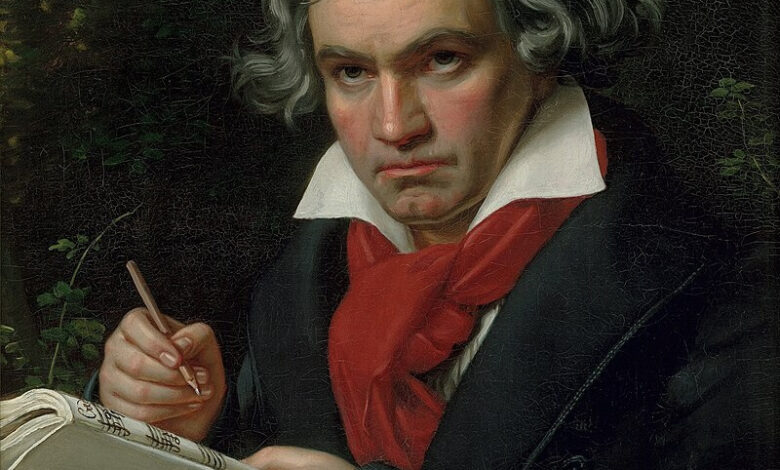
Among the many who found peace here was Ludwig van Beethoven — the fiery genius whose music reshaped the world. Twice he came to Teplitz, drawn by the promise of health and serenity, and left behind one of the most enigmatic love stories in music history.
The Spa of Kings and Composers
By the early 19th century, Teplitz was one of Europe’s most celebrated spa towns. It was a place where the aristocracy, poets, and scholars gathered under the belief that nature could heal the soul as much as the body. Its steaming mineral springs were said to cure everything from exhaustion to melancholy. Beyond the baths, Teplitz offered rolling hills, peaceful parks, and nearby forests where even the most troubled mind could find clarity.
In 1811, Beethoven was exhausted — physically and emotionally. His hearing was deteriorating, his finances were uncertain, and the strain of constant work was taking its toll. His physician, Dr. Giovanni Malfatti, prescribed rest and ordered him to stop composing for a while.
Obedience, however, was never Beethoven’s strong suit.
Just as he was leaving Vienna for Teplitz, he received a commission from playwright August von Kotzebue for incidental music to accompany two new plays: King Stephen and The Ruins of Athens. Though warned by his doctor to stop working, Beethoven wrote to a friend,
“Although my doctor has forbidden me to work, I sat down to do something for those mustachios who are genuinely fond of me.”
In typical Beethoven fashion, he ignored rest and poured himself into the music — completing thirty-five minutes of new compositions in less than three weeks. When he learned the theater opening in Pest (now Budapest) had been postponed, he sighed and sent the pieces anyway, unaware that these works would become part of his enduring legacy.
The Solitary Wanderer of Teplitz
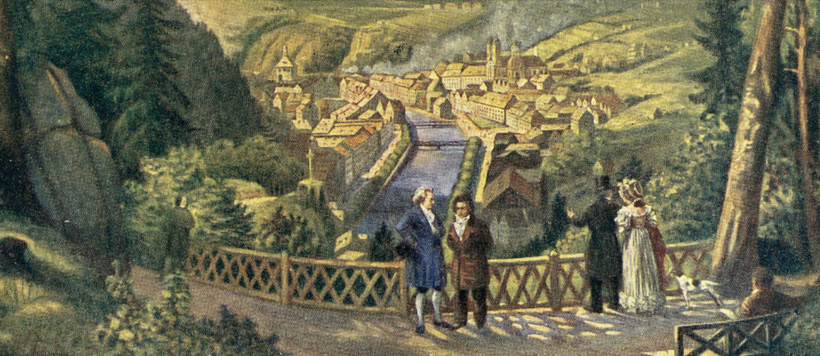
Despite his stubbornness, Teplitz worked its quiet magic. Beethoven’s walks through the forests and mountains brought him peace and renewal. His friend, the writer Karl August Varnhagen von Ense, recalled:
“I made the acquaintance of Beethoven and found this reputedly savage and unsociable man to be the most magnificent artist with a heart of gold. On his walks he seeks out distant places along the lonely paths between the mountains and through the forest, finding peace in the contemplation of the great features of nature.”
During that first stay, Beethoven also met the philosopher Johann Gottlieb Fichte and the poet Christoph August Tiedge, whose friendship he deeply valued. “Every day I berate myself for not having made your acquaintance sooner,” Beethoven later wrote to Tiedge — proof that beneath his tempestuous spirit was a man hungry for understanding and connection.
When he returned to Vienna later that year, he was stronger, both in body and spirit. But the following summer would change his life forever.
The Return to Teplitz — 1812
In July 1812, Beethoven came back to Teplitz for a second stay. His hearing had worsened, his temper flared more easily, and loneliness haunted him. Yet this was also the summer that would bring two legendary encounters — one with Johann Wolfgang von Goethe, and the other with an unnamed woman known only as “the Immortal Beloved”.
Before reaching Teplitz, Beethoven stopped briefly in Prague to meet his patron, Prince Kinsky. Two days later, his carriage rolled into Teplitz, and the next morning, in a burst of emotion, he began writing his now-famous letter to the Immortal Beloved — a passionate, confessional outpouring addressed to a woman whose identity remains one of music’s greatest mysteries.
The letter spans three sections — morning, evening, and the following day — capturing his torment, longing, and resignation.
“Ever thine. Ever mine. Ever ours.” he wrote.
Was she Antonie Brentano, Josephine Brunsvik, or someone else entirely?
Scholars still debate it. What we know for certain is that this love, whatever its promise, ended in Teplitz — and its loss cast a long shadow over Beethoven’s life.
A Meeting of Titans — Goethe and Beethoven
During this same stay, Beethoven finally met Johann Wolfgang von Goethe, the great German poet and philosopher. The meeting, long anticipated, has become legend. The two men admired each other’s genius, but could not have been more different in temperament.
They spent nearly a week together, walking through the spa gardens, talking about art, humanity, and music. Yet Goethe found Beethoven’s wild independence unsettling, writing afterward:
“I made Beethoven’s acquaintance in Teplitz. His talent amazed me. However, he is an utterly untamed personality, who is not altogether in the wrong if he finds the world detestable, but he thereby does not make it more enjoyable either for himself or others.”
Beethoven, for his part, found Goethe too comfortable with royal circles and courtly manners, remarking,
“Goethe delights far too much in the court atmosphere, far more than is becoming to a poet.”
Still, their meeting remains one of the most famous encounters in cultural history — two towering figures of art and intellect crossing paths in a quiet Czech spa town.
After that fateful summer, Beethoven never returned to Teplitz again. The years that followed brought periods of brilliance — the Seventh Symphony, the Hammerklavier Sonata, and the late string quartets — but also deep isolation.
Yet Teplitz remained the place where his spirit briefly softened, where he walked among forests and found both love and heartbreak. It was here that the man behind the music became deeply, achingly human.
Writing about Beethoven in Teplitz reminds me how much history lives quietly in the Czech Republic — not only in monuments or palaces but in towns like Teplice, where genius once paused to breathe.
When you walk through the spa gardens today, you can still sense his presence — that restless energy, that longing for beauty and peace. Maybe that’s what the healing waters gave him: a moment of stillness in a life defined by storms.
Thank you for helping me preserve and share these stories here on Patreon — the forgotten intersections of art, history, and place that remind us how deeply the Czech lands have shaped the creative soul of Europe.
Until next time,
Kytka & Richard
Kytka writes about lifestyle, literature, art and history. Find her at www.patreon.com/kytka/posts