The Czech “Rum” That Isn’t Rum
By Kytka
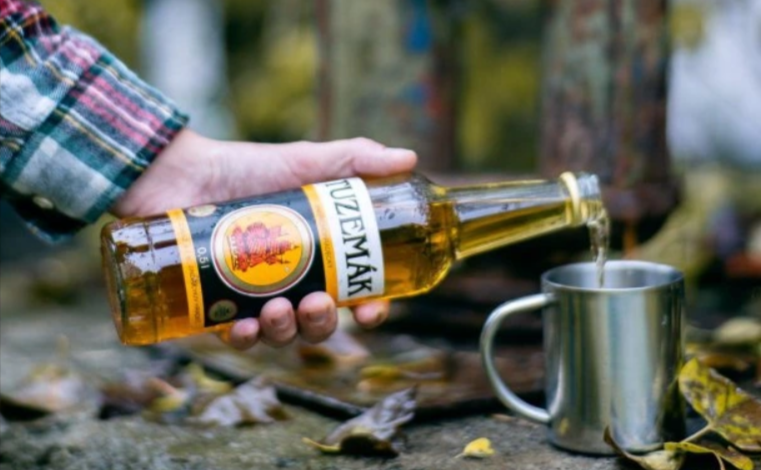
Every Czech knows the smell of Tuzemák — that caramel-dark “rum” that isn’t rum at all. It’s poured into Christmas pastries, splashed into tea on cold nights, and shared around the fire at potlachs and cottages across the country. And for all Czechs, it is the secret fragrance in Christmas cookies! But few know its remarkable story — how it began not in the Caribbean, but in a small South Bohemian town called Jindřichův Hradec.
From Wine Presses to Beet Spirits
In 1898, a man named Moritz Schulz founded a little factory in Jindřichův Hradec to make fruit and dessert wines. He was an innovator — one of the first in Austria-Hungary to bottle wines made entirely from local fruits. His factory was equipped with its own orchards, presses, fermentation tanks, and bottling lines. Schulz didn’t just make drinks — he created entire flavors from scratch, experimenting like an alchemist of taste.
His success grew, and by the early 1900s, he owned a brewery in nearby Kardašova Řečice. For half a century, the Schulz family name stood for fine fruit wines and liqueurs — until history intervened.
World War II scattered the family. Some fled to England; others stayed behind. In 1948, their factory was nationalized by the new communist regime and folded into the massive state enterprise Jihočeská Fruta — a name that would appear on jam jars, baby food, and eventually… a new kind of spirit.
Enter Tuzemský Rum — Rum of the Homeland
Back in the 19th century, long before global trade and tropical imports, the Czech lands (then part of the Austro-Hungarian Empire) didn’t have access to sugarcane — the essential ingredient for real rum. But they did have sugar beets.
So local distillers did what Czechs have always done best — they improvised.
They began fermenting alcohol from sugar beets, potatoes, and grain, then flavored it with secret blends of caramel, vanilla, and spice to mimic Caribbean rum.
This homegrown imitation became known as Tuzemský rum — literally “Rum of the Homeland.” It was part of a broader Central European tradition called Inländer-Rum, or “rum of the homeland.”
And thus, the Czech “rum” was born — not from palm trees, but from fields of beets.
It wasn’t rum by definition, but it became the heart of Czech kitchens, camps, and holidays.
The Taste of Adaptation
To this day, Fruko-Schulz, the same company founded by Moritz Schulz more than 125 years ago, produces about four million bottles of Tuzemák each year. The European Union later ruled that only spirits made from sugarcane could be called rum, so the name changed to Tuzemák — but to Czechs, it’s still “rum.”
Its scent carries a thousand memories.
Christmas baking with your grandmother, stirring rumové kuličky and bábovka batter; sitting by a frozen pond with a flask of rumový čaj to stay warm; or passing a bottle around a campfire at a tramping potlach, guitars humming under the stars.
The history of Czech “rum” is more than a quirk — it’s a story of ingenuity and identity.
It reflects how Czechs adapted to what they had, turning scarcity into creativity, and how tradition persisted through wars, occupations, and bureaucracy.
When the world said you can’t have rum, the Czechs made their own — from beets.
And somehow, it became better — because it tasted like home.
Stories like this are why I love documenting Czech traditions — small inventions born from hard times, carried forward by memory and taste. Your support here on Patreon keeps this work alive: the research, the writing, the long nights of translating history into stories that make us smile.
Thank you for being part of this journey and for raising a glass — or an enamel mug — to the sweet, stubborn spirit of the Czech people.
Kytka writes about lifestyle, literature, art and history. Find her at www.patreon.com/kytka/posts